

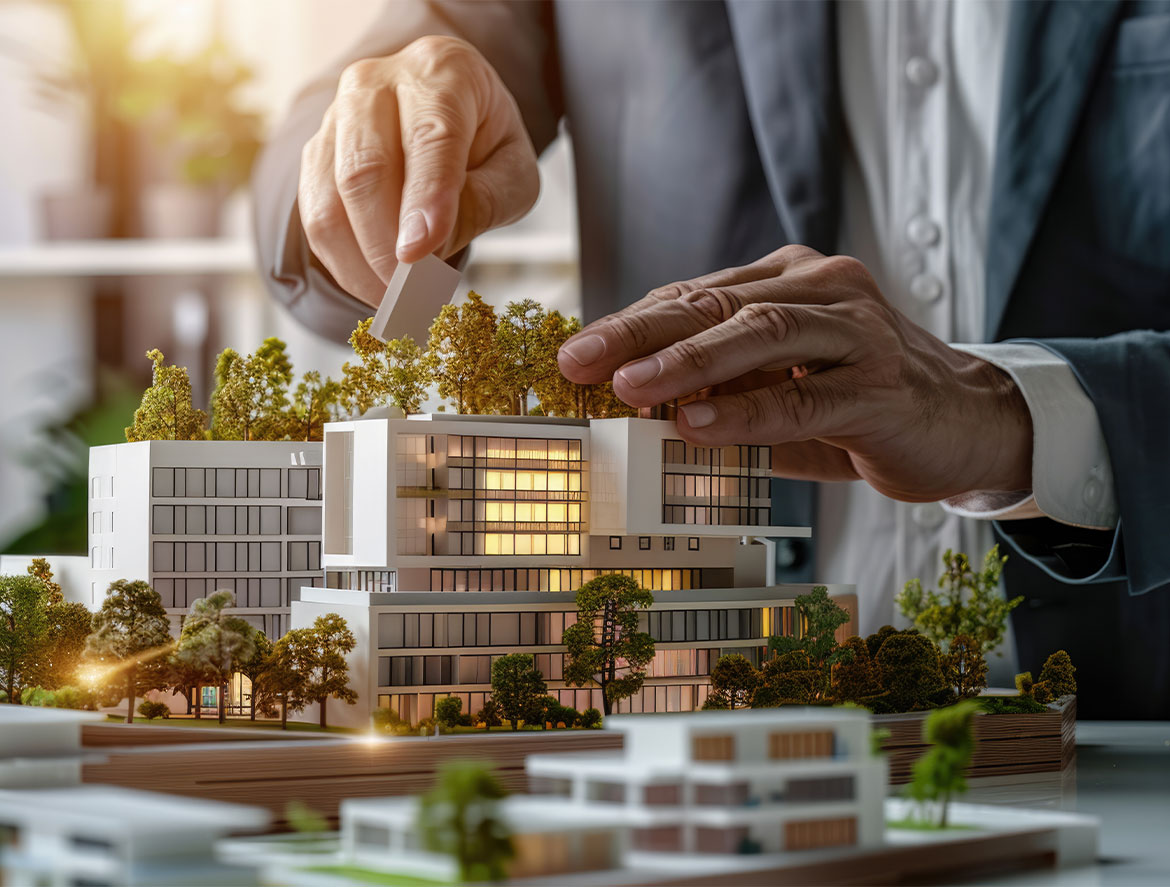
Commercial development is a primary engine of value creation within the global real estate market, which exceeds $35 trillion in total assets worldwide. Historically, well-executed commercial property development projects have delivered average annual returns of 6%–12%, varying by asset class, location, and tenant demand.
As urban growth accelerates and business requirements continue to evolve, commercial development decisions increasingly shape investment risk, income durability, and long-term performance across the commercial real estate business.
Commercial Development Guide: Plan, Finance, Manage
- Commercial development focuses on transforming land or properties into profitable commercial assets through structured planning and execution.
- Successful commercial property development starts with market feasibility, zoning analysis, and aligning the project with real demand.
- Smart financing strategies balance equity and debt to support sustainable growth and reduce risk.
- Effective management ensures cost control, timely delivery, and long-term asset performance.
- A disciplined approach to commercial development strengthens value creation within the commercial real estate business.
What is Commercial Development?
Commercial development is the process of planning, financing, constructing, and managing properties designed for business use. These properties include offices, retail centers, industrial facilities, logistics hubs, and mixed-use developments. It represents a core pillar of the commercial real estate business, focused on transforming land or underutilized assets into income-generating commercial properties.
Key Components of Commercial Development
Planning and Feasibility
The commercial development process begins with feasibility studies that assess market demand, location suitability, zoning regulations, and the highest and best use of the site. Effective planning ensures that the project aligns with real market needs and long-term investment objectives.
For deeper insight into what drives strong performance in individual commercial units — particularly how location, tenant mix, and positioning influence outcomes — see What Makes a Commercial Unit Successful? A Guide for Investors Buying Shops, Retail & F&B Spaces.
Financing and Capital Structure
Financing is a critical stage in commercial development, requiring a balanced capital structure that combines equity and debt. Developers must account for construction costs, soft costs, contingencies, and realistic timelines to maintain financial stability throughout the development cycle.
This approach strengthens investor confidence and prepares the project for long-term performance and resilience against market fluctuations.
To learn how investors analyze commercial real estate deals and optimize returns from listings and valuations, check Commercial Real Estate Investment: How to Analyze Market Listings and Maximize Returns.
Design and Construction
Design and construction translate development plans into physical assets. This stage focuses on functional layouts, efficiency, regulatory compliance, and quality standards that support tenant requirements and long-term operational performance in commercial property development.
Leasing and Market Positioning
Successful commercial development depends on aligning the project with tenant demand. Leasing strategies, tenant mix planning, and market positioning play a major role in stabilizing income and enhancing asset value within the commercial real estate business.
For a clearer understanding of common pitfalls businesses face when choosing their first retail space — and how those choices affect long-term leasing outcomes — see Top Mistakes Businesses Make When Choosing Their First Retail Space (And How to Avoid Them).
Why Commercial Development Matters
Commercial development drives value creation by converting land or underperforming assets into productive commercial properties. When executed strategically, commercial property development supports portfolio growth, enhances market presence, and delivers sustainable income streams while contributing to broader economic activity.
The commercial development process is a structured sequence of steps that transforms land or existing properties into fully operational commercial assets. Each phase plays a critical role in managing risk, controlling costs, and maximizing value within the commercial real estate business.
Stages of the Commercial Development Process
- Site selection & feasibility: Confirm demand, zoning, and project viability.
- Planning & concept: Define use, scale, and market positioning.
- Financing: Structure equity and debt with realistic budgets.
- Design & approvals: Secure compliance and permits.
- Construction: Deliver on time and within budget.
- Leasing: Secure tenants and stabilize income.
- Asset management: Maintain performance and value.
- Exit strategy: Sell, refinance, or hold long term.
Which Is Best for Commercial Development: Build, Renovate, or Reuse?
- Build (New Construction): Ideal for large-scale commercial development projects requiring full design flexibility and modern specifications.
- Renovate (Redevelopment): Enhances existing assets and improves performance with lower cost and faster delivery in commercial property development.
- Reuse (Adaptive Reuse): Converts existing buildings for new purposes, reducing costs and supporting sustainability within the commercial real estate business.
- Cost & Time: New builds demand higher capital and longer timelines, while renovation and reuse often accelerate project completion.
- Market Fit: The optimal approach depends on location, zoning flexibility, and real demand drivers.
- Risk & Return: New construction carries higher risk and return potential, while renovation and reuse offer more predictable outcomes.
- Strategic Alignment: The best option aligns with investment goals, risk tolerance, and long-term strategy in commercial development.
Regulatory Requirements for Commercial Property Developers
- Zoning and Land-Use Regulations: Commercial property developers must ensure that projects comply with zoning laws and permitted land-use classifications before proceeding with any commercial development.
- Planning and Building Approvals: Development projects require formal planning permissions, building permits, and authority approvals to move forward legally within the commercial real estate business.
- Environmental and Impact Assessments: Many jurisdictions require environmental studies to evaluate the impact of commercial property development on traffic, infrastructure, and surrounding communities.
- Health and Safety Compliance: Developers must adhere to construction safety standards, fire regulations, and accessibility requirements throughout the commercial development process.
- Utilities and Infrastructure Coordination: Approvals related to water, electricity, sewage, and telecommunications are essential before and during development.
- Contractual and Legal Documentation: Proper contracts, land titles, and development agreements protect developers and investors in the commercial real estate business.
- Ongoing Regulatory Monitoring: Compliance does not end at completion; ongoing inspections, certifications, and renewals are often required during operation and leasing.
How to Finance a Commercial Development Project
Financing a commercial development project requires a structured approach that balances capital availability, risk management, and long-term investment objectives within the commercial real estate business.
- Equity investment: First funding layer that shows commitment and lowers lender risk in commercial property development.
- Construction financing: Short-term loans covering building costs during the active commercial development phase.
- Permanent financing: Long-term funding replaces construction debt after stabilization to support cash flow in the commercial real estate business.
- Pre-leasing commitments: Secured tenants reduce income uncertainty and improve financing terms.
- Joint ventures: Partnerships share capital needs, reduce risk, and strengthen execution in complex developments.
- Public incentives: Grants, tax benefits, and programs help lower costs and enhance returns.
- Financial planning: Accurate budgets, contingencies, and realistic timelines ensure financing stability throughout the development lifecycle.
Challenges and Solutions in Managing Commercial Development
- Cost overruns: Result from unexpected expenses and design changes.
Solution: Detailed budgeting, contingencies, and strict cost control. - Project delays: Caused by permits, coordination issues, or supply disruptions.
Solution: Realistic timelines, proactive coordination, and progress tracking. - Regulatory complexity: Zoning and approvals add execution risk.
Solution: Early engagement with legal and regulatory experts. - Market demand uncertainty: Shifts in tenant needs affect leasing stability.
Solution: Data-driven market research and flexible design. - Financing and cash-flow pressure: Construction phases strain liquidity.
Solution: Diversified financing and milestone-based funding. - Operational transition risk: Weak handover impacts asset performance.
Solution: Early planning for asset management and stabilization.
Market Trends in Commercial Real Estate Development
- Logistics and industrial demand continue to drive growth in commercial development near major transport corridors.
- Retail commercial property development is shifting toward experience-led formats and stronger tenant mix strategies.
- Office projects are adapting to flexible layouts and higher-quality environments within the commercial real estate business.
- Infrastructure expansion and urban growth remain key location drivers for commercial development opportunities.
- Financing is becoming more selective, emphasizing tenant quality and pre-leasing in commercial property development.
- Data-driven analysis is increasingly essential for decision-making across the commercial real estate business.
Building Successful Commercial Property Developments
- Successful commercial property developments start with clear market research to confirm real tenant demand and viable use.
- Strategic site selection plays a critical role in long-term performance within the commercial real estate business.
- Strong planning aligns design, functionality, and scalability with market needs in commercial development projects.
- Well-structured financing ensures cash-flow stability and risk control throughout the development lifecycle.
- Efficient project management reduces delays, controls costs, and protects returns in commercial property development.
- Tenant-focused design and leasing strategies enhance occupancy, rental strength, and asset value.
- Proactive risk management and regulatory compliance support sustainable success in commercial development.
- Long-term asset management preserves income stability and maximizes value within the commercial real estate business.
The Propster’s Role in Commercial Development
Within today’s evolving commercial real estate business, The Propster plays a strategic role as a data-driven platform that supports smarter investment and development decisions. By combining market intelligence with execution-focused guidance, The Propster helps investors and developers unlock value across commercial development and commercial property development, turning well-researched opportunities into high-performing, income-generating assets.
Conclusion
Commercial development is a strategic investment process that directly influences asset performance, risk exposure, and long-term value. Investors who apply disciplined planning, market insight, and proactive management are best positioned to achieve sustainable growth within the commercial real estate business.
What is commercial property development?
A.Commercial property development is the process of planning, financing, and constructing business-use properties such as offices, retail, and industrial assets. It focuses on transforming land or existing assets into income-generating properties aligned with market demand and long-term value creation.
How does commercial property development differ from buying existing assets?
Commercial property development creates new value through planning and construction with higher risk and upside, while buying existing assets offers stable income with lower risk but limited growth potential.
What are the main risks in commercial property development?
The main risks in commercial property development include cost overruns, delays, financing pressure, regulatory issues, and uncertainty in tenant demand
What are the main risks in commercial property development?
The main risks in commercial property development include cost overruns, construction delays, financing and cash-flow pressure, regulatory and permitting issues, and uncertainty in tenant demand

Join The Discussion